Recent Courses
2026 Fall
Intro to Historical Theory and Methodology (with AI)
I redesigned this graduate seminar as a project-driven course that combines historical methodology, experiential learning, and experimentation with artificial intelligence. Working in interdisciplinary teams, students are developing an AI-powered, searchable knowledge base drawn from interviews on my Practical History podcast, which explores how historians apply their skills in business, technology, government, and other professional settings. The project challenges students to think critically about how knowledge is produced, classified, organized, and retrieved, while gaining hands-on experience with AI tools, database design, and collaborative problem-solving. The resulting resource aims to help humanities students better understand the professional value of their skills and discover strategies for navigating careers beyond academia. Alongside this collective project, students maintain personal development archives, experimenting with AI-assisted reflection to better understand their own learning, experiences, and intellectual growth.

2025 Fall
History & Global Leadership (with AI)
What makes an effective leader, and how can history help us understand and practice leadership? This course moves beyond popular leadership buzzwords to examine the complex relationships between leadership, power, ethics, and decision-making. Through historical case studies of political and business leaders from different parts of the world, students explore how individuals have navigated uncertainty, confronted strategic challenges, and exercised judgment in times of war and peace. They also investigate how leaders themselves have drawn on historical knowledge to inform their decisions. Combining historical analysis with experiential learning, the course challenges students to apply lessons from the past to contemporary problems and their own lives. As a final project, students use historical research, critical thinking, and AI tools to develop original leadership case studies, putting their historical knowledge and analytical skills to practical use.

2024 Summer
Practical History
I designed this summer course as an experiment in experiential learning, challenging students to apply their historical knowledge and skills to a real-world project for an institutional partner. Working with the University of Texas at Arlington Libraries, students collaborated to develop a public-facing website telling the story of Top O' Hill, a historic site in Arlington with a fascinating past. Organized into research, strategy, and design teams, students conducted historical research, interviewed stakeholders, identified target audiences, developed content, and worked on the website's structure and user experience. The course emphasized collaborative problem-solving, project management, and communication, introducing students to approaches and tools rarely encountered in traditional history classrooms. Beyond producing a tangible public history resource, the project encouraged students to recognize how their humanities training could contribute to the work of organizations and professionals outside academia, particularly in areas such as storytelling, audience engagement, and digital communication.

2024 Spring
USSR and the Global Cold War
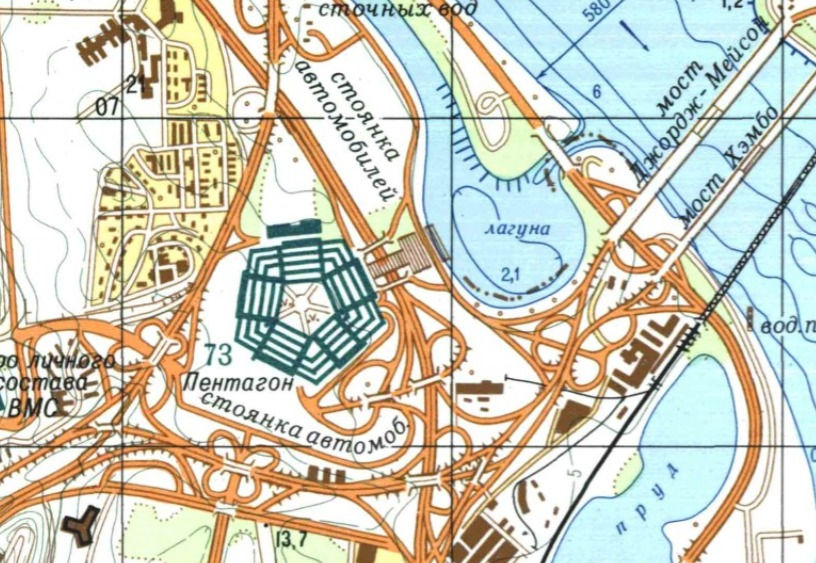
This course examines the Cold War from the Soviet perspective, tracing the evolution of Soviet foreign policy, international ambitions, and perceptions of the world from Joseph Stalin to Mikhail Gorbachev. Moving beyond conventional Western-centered narratives, students explore the origins and eventual end of the Cold War, the motivations and strategies that shaped Soviet actions, and the changing relationship between ideology, security concerns, and geopolitical interests. Topics include Soviet relations with the West, China, and the developing world; the establishment and maintenance of communist regimes in Eastern Europe; Soviet involvement in international crises and regional conflicts; the nuclear arms race; and the role of propaganda, cultural diplomacy, and consumer culture in the global competition between socialism and capitalism. Drawing on historical scholarship informed by previously inaccessible Soviet archival materials, the course challenges students to appreciate the complexity of Soviet decision-making, recognize the diversity of perspectives within the communist world, and understand the Cold War as a multifaceted global conflict rather than simply a confrontation between two superpowers.
2023 Winter
Socialism and Cinematic Imagination
The course examines the complicated relationship between cinema and history in the Soviet Union and communist Eastern Europe, between 1917 and 1991. How did films recount the past in various moments of history of socialist states? How did the cinematic imagery and institutional context of film production and distribution reflect the possibilities and limitations of a given political moment--and of socialism more generally? Was there such a thing as "socialist cinema" behind the "Iron Curtain," a region where various states and peoples continued to embrace nationalism? Students will survey a sample of famous and lesser-known films from various periods (the early years of the Soviet state, Stalinism, "the Thaw," and late socialism) and genres (comedy, drama, science fiction) to try to answer these questions, become familiar with the vibrant cinematic imagination that was born under socialism, situate the films in their historical contexts, and hopefully enjoy themselves too. Themes of the course will include: state manipulation through propaganda, efforts to create socialist pop culture, narratives and counter-narratives of socialism on film, tensions between national cinema and "socialist" cinema, film reception, and the question of artistic freedom under socialism.

2022 Fall
East-Central Europe and the Modern World
This course explores the history of East-Central Europe from the eighteenth century to the present, examining the region not as an isolated or peripheral part of the continent, but as an integral participant in the making of the modern world. Students critically examine the shifting geographical and cultural definitions of East-Central Europe, challenging familiar narratives of the region as Europe's backward periphery or perennial battleground. Through themes such as imperialism, nationalism, migration, globalization, economic development, and the Cold War, the course investigates how the region has been shaped by its connections with the wider world—and how it has, in turn, influenced global developments. Particular attention is devoted to the movement of people, ideas, and cultural practices across borders, as well as the ways East-Central Europeans have understood and negotiated their relationship with the West. By exploring the region's diverse experiences, including life behind the Iron Curtain, students develop a more nuanced understanding of Europe's historical divisions and the extent to which their legacies continue to shape contemporary political and social tensions.

MY TEACHING APPROACH
I see teaching as an opportunity to help students develop their own ways of thinking, asking questions, and making sense of a complex world. I enjoy traditional seminars built around the Socratic method and close engagement with texts, but I'm equally drawn to experiential learning and project-driven courses that challenge students to put their knowledge and skills to work. I believe we're living through a profound transformation in how knowledge is produced, organized, and retrieved, and that education needs to engage creatively and critically with these changes. Increasingly, I experiment with artificial intelligence in my teaching, exploring how it can help us accomplish things that would otherwise be difficult or impossible—not by outsourcing our thinking to machines, but by amplifying human curiosity, creativity, and intellectual effort.
I'm also committed to interdisciplinary learning, which I believe will play an increasingly important role in the future of higher education. Some of the most interesting questions and challenges don't fit neatly within disciplinary boundaries, and learning to communicate and collaborate across them is becoming an essential skill. I want my students to recognize that the humanities offer much more than specialized knowledge about the past or particular cultures: they cultivate ways of thinking, interpreting, communicating, and exercising judgment that matter across a wide range of professional environments. Ultimately, my goal is to help students become more intellectually independent, more confident in navigating unfamiliar territory, and more aware of what they can contribute to the world beyond the classroom.
